
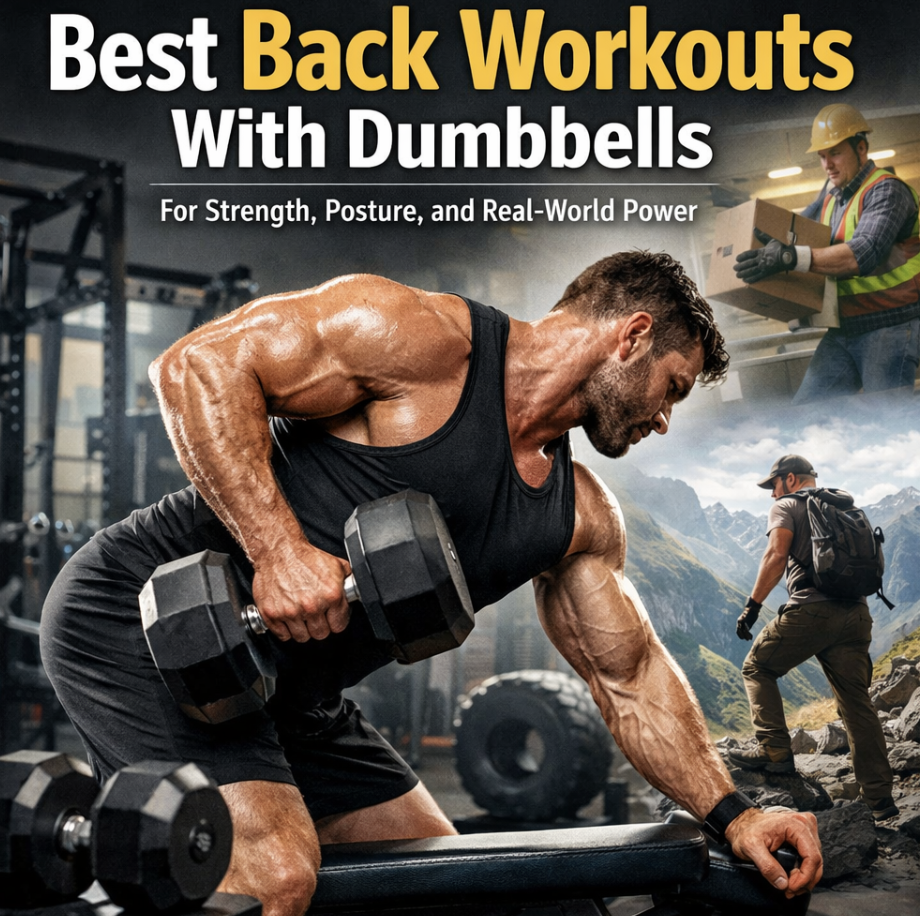
If you want a stronger upper body, better posture, and a back that actually supports you in daily life, back workouts with dumbbells are one of the smartest places to start. Dumbbells are practical, accessible, and incredibly effective because they let each side of your body work independently, which helps you build strength more evenly and improve control.
A lot of people focus on chest, arms, or abs first, but your back is the foundation for how you move, lift, and carry yourself. The back includes major muscle groups like the lats, traps, rhomboids, and deeper support muscles that help stabilize your spine and shoulder blades. A stronger back can help with posture, shoulder comfort, and overall training performance. The back is also a major muscle group in standard physical activity recommendations, which is one reason strength training matters so much for long-term health. Wikipedia: Human back, CDC Adult Activity Guidelines, and ACSM Physical Activity Guidelines are great places to learn more.
The good news is you do not need a full gym to get results. back workouts with dumbbells can be done at home, in a garage, or in a gym with just a bench and a pair of weights. This article will walk you through the best exercises, how to do each one correctly, and how to put them together into a workout that builds strength without beating up your joints.
Why Dumbbell Back Training Works So Well
Dumbbells are excellent for back training because they allow a bigger range of motion than many machines, and they force you to control the weight instead of relying on a fixed path. That control matters. It helps train your shoulder blades to move well, teaches your core to stabilize, and can expose side-to-side imbalances that are easy to hide on a barbell.
Another major advantage is progression. With back workouts with dumbbells, you can start light and focus on form, then gradually increase the weight as your technique improves. That makes them useful for beginners and advanced lifters alike. If you stay consistent, you can build strength, muscle, and better movement quality over time. Strength training in general is linked with benefits like improved muscle mass, stronger bones, and better overall health markers, which is why reputable organizations keep recommending it as part of a balanced routine. Mayo Clinic strength training basics, Cleveland Clinic on strength training benefits, and Harvard Health on strength training all reinforce that point.
Before You Start: Form Rules That Protect Your Back
Before you jump into back workouts with dumbbells, keep these form basics in mind:
Start with a neutral spine. That means your back should stay long and stable, not rounded or cranked into an exaggerated arch. Think “chest proud, ribs down, core braced.”
Move from your shoulder blades, not just your hands. A strong back workout is not about yanking the dumbbells with your arms. It is about pulling with the muscles of your upper and mid-back while your shoulder blades retract and move smoothly.
Use a controlled tempo. Do not rush the rep. Lift with intention, pause briefly when the dumbbell reaches the top position, and lower it under control. The lowering phase is where a lot of strength and muscle growth happens.
Choose a weight you can own. If you have to twist, jerk, or shrug your way through every rep, the weight is too heavy. The Mayo Clinic notes that proper form matters for both safety and results, and that is exactly right.
The Best Back Workouts With Dumbbells and How to Do Them
These are the core exercises I recommend for most people. Together, they train your lats, rhomboids, traps, rear shoulders, and spinal support muscles in a balanced way. If you only build one routine from this article, build it around these movements.

1) Single-Arm Dumbbell Row
This is one of the best back workouts with dumbbells exercises because it lets you train each side separately and really feel the lat and mid-back working.
How to do it:
Place your left knee and left hand on a bench. Put your right foot on the floor. Hold a dumbbell in your right hand with your arm hanging straight down. Keep your spine flat and your core tight. Pull the dumbbell toward your hip, not your shoulder. At the top, squeeze your shoulder blade back and down. Lower the dumbbell slowly until your arm is fully extended. Complete all reps, then switch sides.
Form tip:
Think “elbow to back pocket.” That cue helps you target your lats instead of turning it into a biceps exercise.
Common mistake:
Twisting your torso to get the dumbbell up. Keep your chest stable and let your back do the work.

2) Chest-Supported Dumbbell Row
If your lower back gets tired easily, this variation is gold. Chest support reduces momentum and helps you isolate the upper and mid-back.
How to do it:
Set an incline bench (around 30–45 degrees). Lie face down with your chest supported and a dumbbell in each hand. Let your arms hang straight down. Pull both dumbbells up by driving your elbows back. Squeeze your shoulder blades together at the top. Lower slowly and repeat.
Form tip:
Keep your neck neutral and your chin slightly tucked. Do not crane your head up while rowing.
Why it works:
This is one of the most effective back workouts with dumbbells movements for clean reps because the bench removes the temptation to use body swing.

3) Dumbbell Bent-Over Row
This is the classic bilateral row and a great muscle builder when done with good form.
How to do it:
Stand with feet about hip-width apart holding a dumbbell in each hand. Hinge at the hips until your torso is angled forward (roughly 30–45 degrees above parallel to the floor). Keep your spine neutral and knees slightly bent. Pull both dumbbells toward your lower ribs, then lower them slowly.
Form tip:
Brace your abs before every set. Your torso should feel locked in.
Common mistake:
Standing too upright. If your torso is too vertical, you lose a lot of the back stimulus and turn it into more of a shrug or arm movement.

4) Dumbbell Reverse Fly
This move targets the upper back and rear delts, which are huge for posture and shoulder balance.
How to do it:
Start in a hip hinge or use an incline bench for chest support. Hold light dumbbells with palms facing each other. With a soft bend in your elbows, raise your arms out to the sides until they reach about shoulder level. Pause, then lower under control.
Form tip:
Use lighter weights than you think. Reverse flys are about precision, not ego.
What to feel:
The muscles between your shoulder blades and the back of your shoulders should light up. This is a key movement in back workouts with dumbbells if you sit a lot or feel rounded forward.
5) Dumbbell Pullover
The pullover is a great hybrid move that can train the lats, chest, and serratus, depending on your form and setup. For this article, we are using it with a back emphasis.
How to do it:
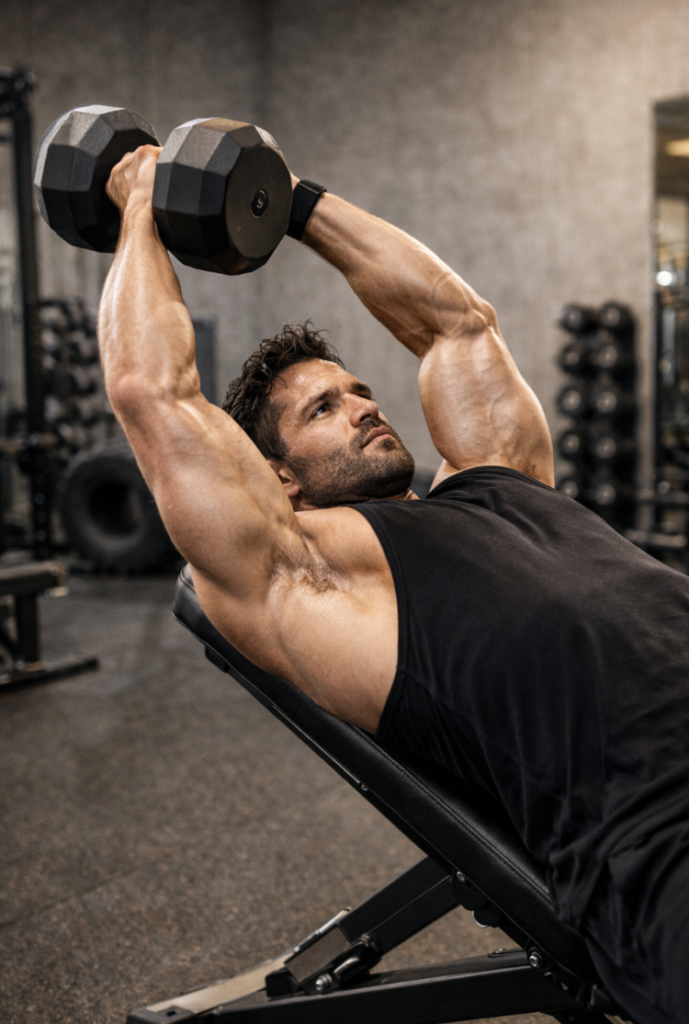
Lie on a flat bench holding one dumbbell by the top end with both hands. Start with the dumbbell over your chest and your elbows slightly bent. Slowly lower the dumbbell backward in an arc until you feel a stretch through your lats and ribcage. Pull it back over your chest using your lats, not just your arms.
Form tip:
Keep your ribs down and core engaged. Do not let your lower back overarch.
Why it belongs:
It gives your back a different angle of loading than rows, which helps round out back workouts with dumbbells.
6) Dumbbell Romanian Deadlift (RDL)
This is technically a hip-hinge exercise, but it is essential because your back works hard isometrically to stay stable while your glutes and hamstrings move the load. It builds the posterior chain and teaches strong mechanics.
How to do it:
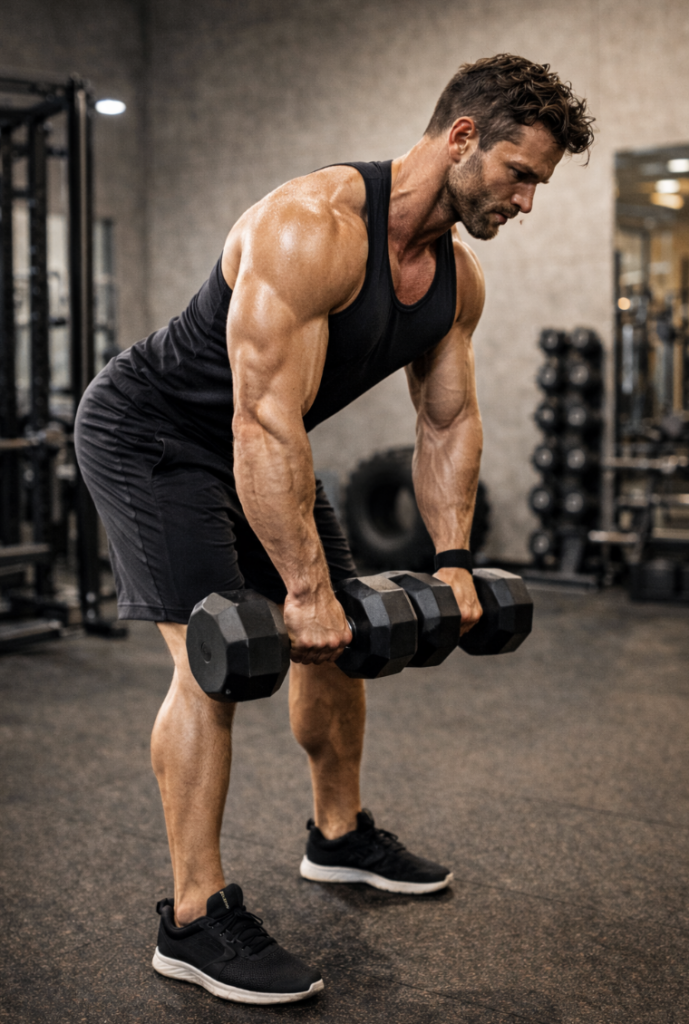
Stand tall with a dumbbell in each hand in front of your thighs. Soften your knees and push your hips back as you slide the dumbbells down your legs. Keep your spine neutral and shoulders packed. Lower until you feel a strong stretch in your hamstrings, then drive your hips forward to stand tall.
Form tip:
Keep the dumbbells close to your body the whole time.
Common mistake:
Rounding your back to go lower. Stop where your hamstring mobility allows while maintaining posture.
7) Dumbbell Shrug With Pause
Shrugs get overused sometimes, but when done correctly, they are excellent for upper traps and upper back support.
How to do it:
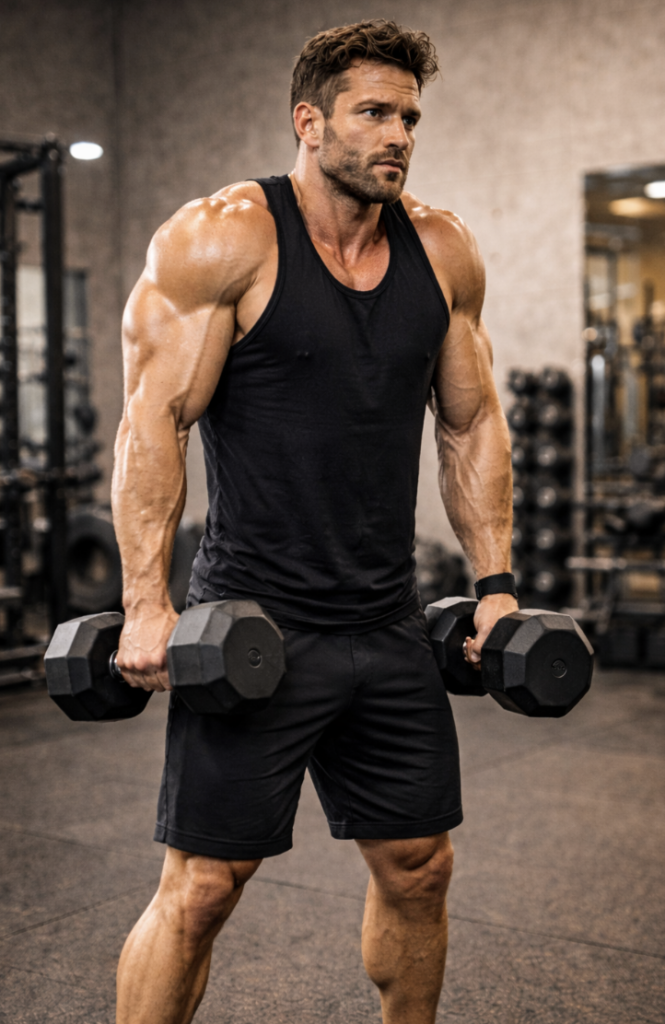
Stand tall holding dumbbells at your sides. Lift your shoulders straight up toward your ears, pause for one full second, then lower slowly. Keep your arms straight and avoid rolling your shoulders.
Form tip:
Think “up and down,” not circles.
How to use it:
Use moderate to heavy weight with clean control. This is a simple but effective finisher in back workouts with dumbbells.

8) Renegade Row
This one combines rowing with anti-rotation core work, so it trains your back while challenging stability.
How to do it:
Get into a high plank with a dumbbell in each hand on the floor. Feet should be wide enough for balance. Row one dumbbell toward your ribcage while keeping your hips as level as possible. Lower it, then row the other side.
Form tip:
Move slowly. The goal is not speed. The goal is resisting rotation.
Beginner option:
Elevate your hands on a bench to reduce the load and make the position easier to control.
How to Build a Complete Dumbbell Back Workout
If you are not sure how to combine these, here is a simple template that works well:
Start with your main row (single-arm row or chest-supported row).
Add a second row pattern (bent-over row).
Add an upper-back isolation move (reverse fly).
Add a hinge pattern (RDL).
Finish with shrugs or pullovers.
This structure gives you a strong mix of horizontal pulling, upper-back work, and posterior-chain support. A sample plan could look like this:
- Single-Arm Dumbbell Row: 3–4 sets of 8–12 reps per side
- Chest-Supported Dumbbell Row: 3 sets of 10–12 reps
- Dumbbell Reverse Fly: 3 sets of 12–15 reps
- Dumbbell Romanian Deadlift: 3–4 sets of 8–10 reps
- Dumbbell Shrug: 2–3 sets of 12–15 reps with a pause
If you are newer, start with 2 sets per exercise and focus on technique. If you are more advanced, increase to 3–4 sets and progressively add load or reps over time. back workouts with dumbbells do not need to be complicated to be effective. Consistency, form, and progression win.
How Often to Train Your Back
Most people do well training their back 1–3 times per week, depending on the rest of their routine. The CDC recommends adults include muscle-strengthening activity at least two days per week, and the Mayo Clinic similarly recommends training major muscle groups at least twice weekly while avoiding back-to-back days for the same muscle group. That is a smart baseline for most people. CDC and Mayo Clinic both provide easy-to-follow guidance.
A practical approach:
- If you do full-body workouts, train back in each session with 2–3 exercises.
- If you do upper/lower splits, give back a bigger focus on upper-body days.
- If you do a push/pull/legs split, your pull day is where back workouts with dumbbells can really shine.
Progression Tips That Actually Work
If you want results, you need a progression strategy. Here is the easiest one:
Use a rep range. For example, 8–12 reps. Start with a weight you can do for 8 good reps. Each week, try to add reps while keeping form tight. Once you can hit 12 reps on all sets, increase the weight and repeat.
You can also progress by:
- Slowing the lowering phase (3 seconds down)
- Pausing at the top for a stronger squeeze
- Adding one extra set
- Improving range of motion and control
Do not chase heavier dumbbells at the expense of technique. Good back training is about tension and position, not just moving weight.
Common Mistakes to Avoid
One of the biggest mistakes in back workouts with dumbbells is pulling with the arms instead of the back. If your biceps burn but your back feels nothing, slow down and focus on driving your elbows, not your hands.
Another common issue is poor setup. A loose core and rounded spine can make rows feel awkward and can irritate your lower back. Take a few extra seconds to brace before each set.
Finally, many people skip upper-back detail work like reverse flys because the weights feel light. That is a mistake. Those lighter, more controlled movements are often what improve posture and shoulder comfort the most.
Recovery and Safety
Back training is rewarding, but recovery matters. Give your muscles time to repair, sleep well, and eat enough protein to support training. Harvard Health and MedlinePlus both emphasize the broad long-term benefits of regular strength work and exercise, including stronger bones and muscles, better function, and better overall health outcomes. Harvard Health and MedlinePlus are solid resources if you want to go deeper.
If you have current back pain, shoulder pain, numbness, tingling, or a history of injury, it is worth checking with a qualified medical professional or physical therapist before starting a new program. The goal is to train hard, not guess your way through pain.
Conclusion
The best back workouts with dumbbells are the ones you can do consistently, with strong form, and with gradual progression. You do not need fancy machines to build a strong, capable back. You need a handful of good movements, clear instructions, and a commitment to doing the basics well.
Start with rows, add reverse flys and RDLs, and stay patient while your strength builds. back workouts with dumbbells can improve how you lift, how you stand, and how you feel day to day. If you stick with it, you will build more than muscle—you will build better movement, better posture, and a stronger foundation for everything else you do.